Blog article
6 early recovery strategies after ACL reconstruction surgery
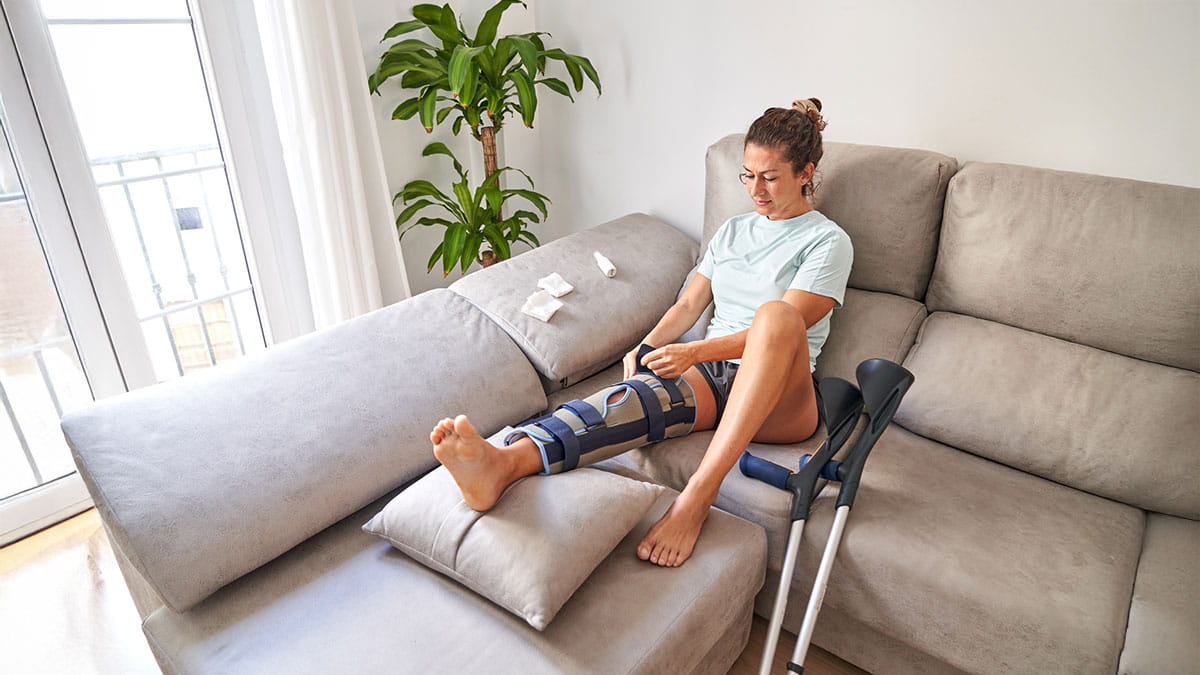
In this blog, we cover early recovery strategies that can help you feel more comfortable and confident as you heal.
It has been developed with insights from Jakub Chudy, Managing Partner and Physiotherapist at HBF Physio Cockburn, and reflects his clinical experience supporting people through recovery.
Strategy 1: Prioritise full knee extension early
Early on, one of the biggest goals is getting your knee straight again – it sets the foundation for everything that follows. Getting your knee fully straight again is one of the most important early goals after ACL surgery. Making sure it straightens as well as your other knee helps set you up for the rest of your recovery.
Early rehab also focuses on gently restoring normal knee movement, which forms the base for progressing to later exercises and activities.
Strategy 2: Manage swelling
Swelling is more than an annoyance – it can affect comfort, movement and how well muscles ‘switch on’. Swelling in/around the joint (joint effusion) is linked with increased pain, decreased quadriceps activation and limited range of motion, which can slow rehabilitation progression.
Icing is generally recommended after exercise to help control swelling, inflammation and pain.
Strategy 3: Build quadriceps activation early
Getting your quads working again is a huge early milestone – it supports walking, movement control and the next phase of rehab. Early recovery focuses on getting your thigh muscles firing again – for example, being able to lift your leg while keeping it straight. This early muscle activation helps support basic movement and sets the foundation for building strength as rehab progresses.
Recovery approaches now start earlier than they used to, with more focus on restoring movement and gently putting weight through the knee, rather than long periods of rest.
Strategy 4: Progress movement and loading gradually
Rehab isn’t a switch you flick — it’s a gradual progression based on how your knee responds. Rehab is designed to move forward in stages, with progress guided by how your knee is functioning – not just how much time has passed. Each stage builds on the last, using strength, movement and control as markers for when it’s safe to do more. Even though some stages often line up with rough timeframes, it’s your knee’s readiness, not the calendar, that matters most.
Strategy 5: Keep your rehab consistent
Consistency beats ‘hero sessions’. If you skip a few days and then try to make up for it, your knee often tells you about it. Doing rehab regularly helps your knee adapt safely over time. Skipping sessions and then doing too much at once can lead to swelling, stiffness and reduced movement. Trying to progress too quickly can have the same effect. If pain, swelling or difficulty shows up, it’s important to adjust rather than push through.
Strategy 6: Stay guided by your rehab team
One of the smartest things you can do is keep checking in – not just doing exercises, but making sure you’re progressing safely. As rehab becomes more challenging, regular check ins help make sure exercises are still right for your stage of recovery. Ongoing review allows your program to be adjusted if issues like pain, swelling or movement changes come up.
A quick reassurance if early recovery feels slow
Early recovery can feel like a lot of effort for small wins – but those small wins matter. Early rehab focuses on reaching specific movement and strength goals before moving on, rather than rushing through stages. Even when you move into later phases, strength and control continue to build over time – recovery doesn’t finish at a single milestone.
How can HBF help?
If you have eligible extras cover with HBF, you may be able to claim benefits for visits to a physiotherapist as part of your recovery after ACL reconstruction surgery.
Physiotherapy can support early recovery by:
- Guiding safe progression of movement and loading, based on your stage and how your knee responds
- Helping monitor swelling and range of motion, so you don’t accidentally jump ahead too quickly
- Supporting quadriceps activation and movement quality, which are key early foundations
- Adjusting your program over time, as you move through rehab phases and toward higher demand movement

This article contains general information only and does not take into account the health, personal situation or needs of any person. In conjunction with your GP or treating health care professional, please consider whether the information is suitable for you and your personal circumstances.