Blog article
Knee replacement recovery timeline
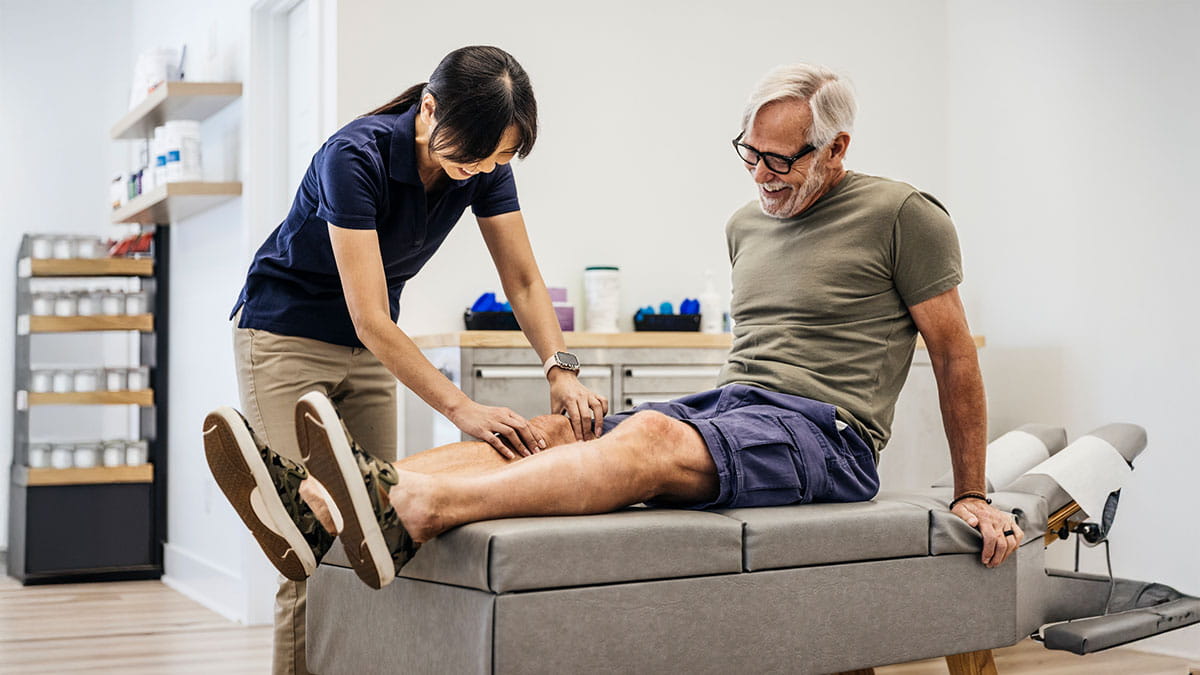
In this blog, we walk through a general knee replacement recovery timeline to help you understand what often happens at different stages of recovery.
It has been developed with insights from Jakub Chudy, Managing Partner and Physiotherapist at HBF Physio Cockburn, and reflects his clinical experience supporting people through recovery.
Week 0: Starting recovery in hospital
Recovery usually starts sooner than people expect – often on the same day or the day after surgery. After knee replacement surgery, rehabilitation typically begins in hospital, with support from nurses and physiotherapists to help you stand and start walking safely. Many people will use a walking aid, such as a frame or crutches, during this early stage.
Pain, swelling and stiffness are common in the first few days after surgery, and pain relief is usually provided to help manage discomfort.
Week 1-3: Settling in at home
The first few weeks are about healing, managing swelling and getting into a gentle routine. Most people leave hospital within a few days of surgery and continue recovery at home, following advice and exercises provided by their care team. During this stage, walking short distances, doing prescribed exercises and managing swelling are commonly recommended.
Swelling can be noticeable during the early weeks and may continue for some time as the knee heals. Walking aids are often still used during this period and are gradually reduced as strength and confidence improve.
Week 3-6: Building confidence with movement
This phase is often when people start to notice small improvements – but recovery is still very much ongoing. Many people find they can move more comfortably, walk further distances and rely less on walking aids during this stage.
Exercises and physiotherapy continue to play an important role in supporting knee movement, strength and function. Everyday activities may start to feel easier, but it’s still important to pace activity and follow professional advice.
Weeks 6-12: Returning to everyday activities
This is often when people begin to feel more like themselves again – but recovery is still progressing. By this stage, many people are continuing to improve knee movement and strength and may be returning to more everyday activities, depending on their recovery and guidance from their healthcare team.
Low impact activities, such as walking or cycling, are commonly introduced or increased during this phase. Swelling and stiffness can still come and go, particularly after increased activity.
3+ months: Ongoing improvement
Knee replacement recovery doesn’t stop at 12 weeks – improvements can continue for many months. Most people continue to see gradual gains in strength, flexibility and confidence over time, with full recovery potentially taking up to a year. Rehabilitation and exercise may continue beyond the early months, depending on individual goals and recovery progress.
Recovery isn’t about hitting milestones on a calendar. It’s about steady progress that suits your body and your life.
A quick reassurance if your timeline feels different
Everyone’s recovery looks a little different – and that’s completely normal. Age, overall health, surgery type and rehabilitation support can all influence how recovery progresses. Comparing your recovery to someone else’s can be unhelpful – what matters most is safe, steady improvement over time.
How can HBF help?
If you have eligible extras cover with HBF, you may be able to claim benefits for visits to a physiotherapist as part of your recovery after knee replacement.
Physiotherapy can support recovery at different stages by:
- Guiding exercises and activity progression, based on your recovery stage
- Supporting walking, strength and confidence, as activity levels increase
- Helping manage stiffness, swelling and discomfort, as you return to daily life
- Adjusting your program over time, as your goals and capacity change
A physiotherapist can help you understand what’s normal at each stage and support recovery at a pace that’s right for you.

This article contains general information only and does not take into account the health, personal situation or needs of any person. In conjunction with your GP or treating health care professional, please consider whether the information is suitable for you and your personal circumstances.