Blog article
Restoring movement after a hip replacement
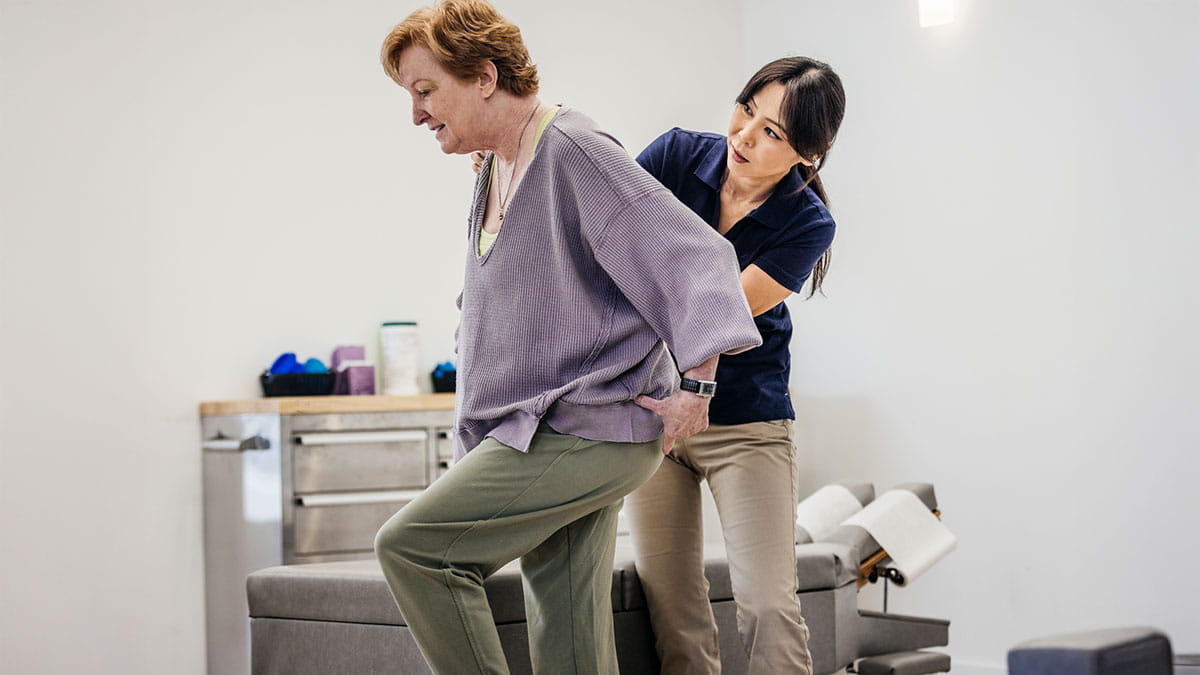
In this blog, we cover the types of exercises commonly used after surgery to support movement and function.
It has been developed with insights from Jakub Chudy, Managing Partner and Physiotherapist at HBF Physio Cockburn, and reflects his clinical experience supporting people through recovery.
Why movement matters (and why it’s gradual)
After a hip replacement, we’re aiming for steady progress – restoring movement safely while your body heals. Regular exercise to restore strength and mobility, alongside a gradual return to everyday activities, is considered an important part of recovery after a total hip replacement. Early movement also helps reduce swelling and stiffness around the joint and can support recovery.
Early post operative exercises (often started very soon after surgery)
Early exercises are usually about circulation and gentle movement – helping your body settle after surgery. Common examples of early exercises include ankle movements (pumps/rotations) to support circulation, gentle knee bends in bed, and muscle ‘sets’ (such as tightening your buttock or thigh muscles to wake up key muscles early on.
Walking is one of the most important ‘movement exercises’ after hip replacement – and it tends to build up gradually. When you’re starting out, walking aids can help you move safely while your confidence and strength return.
Progressing your exercises as movement returns
Rehab isn’t a switch you flick – it’s a progression. Rehabilitation should be built up gradually, with a graduated increase in exercise difficulty and the time spent performing exercises. As movement improves, exercise programs often progress from bed based and seated movements to standing, balance and functional exercises that support everyday activities.
Examples of later stage, movement focused exercises may include:
Sit to stand and squat style movements: These movements help rebuild confidence with everyday tasks like getting up from a chair. Sit to stand patterns and squat style exercises are commonly used to support the strength and control needed for daily activities.
Step based movements: Step ups are often used to help prepare people for stairs and uneven surfaces. These types of exercises support functional strength and coordination as people return to everyday movement.
Calf raises and lower leg strengthening: Calf strength plays an important role in walking and balance. Later stage exercise programs may include calf focused movements to support walking endurance and overall stability.
Balance exercises: Balance work helps improve stability and confidence as people return to more independent movement. These exercises are commonly included to support safe movement and reduce fall risk as recovery progresses.
How can HBF help?
If you have eligible extras cover with HBF, you may be able to claim benefits for visits to a physio as part of your recovery after hip replacement.
Physiotherapy can support the movement and rehabilitation phase by:
- Guiding safe progression of exercises, based on your surgery type and recovery stage
- Supporting walking, balance and functional movement, as you return to everyday activities
- Adjusting your program over time, as strength, control and endurance improve
A physio can help make sure your recovery stays on track — supporting steady progress without pushing too hard, too soon.

This article contains general information only and does not take into account the health, personal situation or needs of any person. In conjunction with your GP or treating health care professional, please consider whether the information is suitable for you and your personal circumstances.