Blog article
6 early recovery strategies after patella realignment surgery
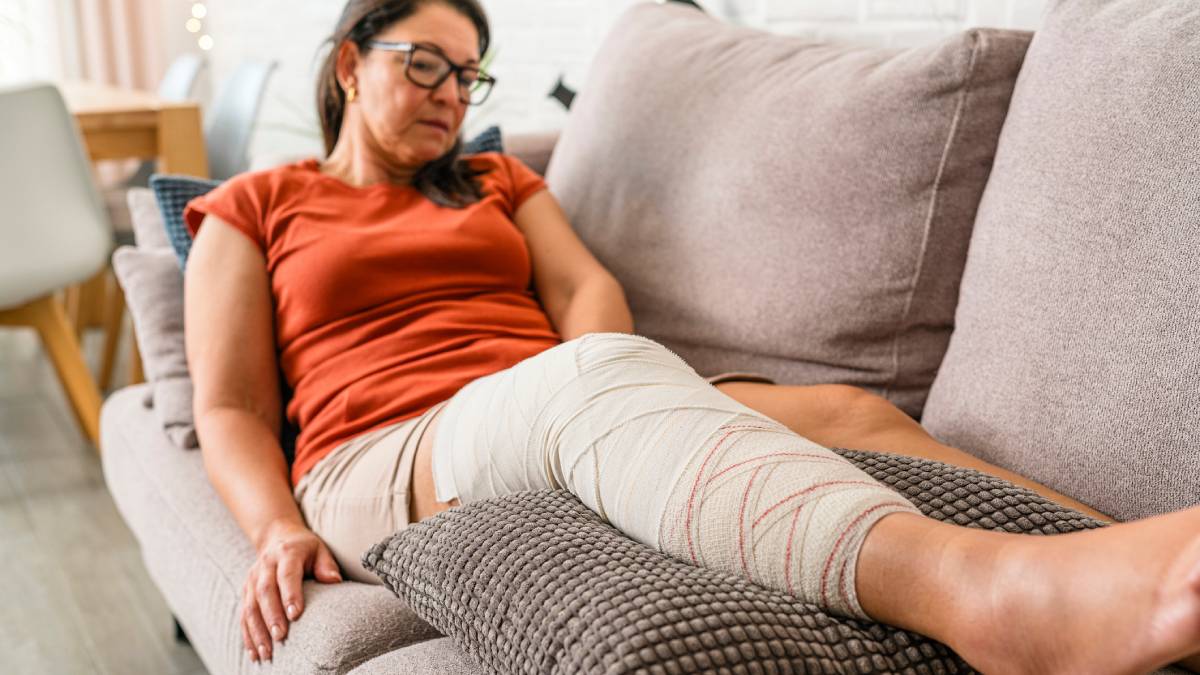
In this blog, we cover early recovery strategies that can help support your knee as you heal. It has been developed with insights from Jakub Chudy, Managing Partner and Physiotherapist at HBF Physio Cockburn, and reflects his clinical experience supporting people through recovery.
Strategy 1: Protect your knee in the early stages
Early recovery is focused on protecting the surgical repair and helping the kneecap settle into its new alignment. Depending on your procedure, this can involve:
- Wearing a brace, often in a locked or limited position in the early phase
- Using crutches to support walking
- Limiting how far the knee bends (for example, early movement may be restricted to around 90 degrees)
These kinds of restrictions are designed to protect the healing structures and support stability in the knee early on.
Strategy 2: Manage swelling early and consistently
Swelling is a normal part of recovery after patella realignment surgery – but it can affect comfort, movement and muscle activation. Ways to help manage swelling can include:
- Using ice regularly, especially in the first few days after surgery
- Elevating the leg to reduce fluid build-up
- Using compression (such as bandaging or stockings) where advised
Managing swelling early may help improve comfort and support movement as recovery progresses.
Strategy 3: Start gentle movement early (within guidance)
Early movement is often introduced soon after surgery, but it’s about doing the right amount. This can involve:
- Beginning gentle movement or walking with support, as guided by your care team
- Gradually increasing how much weight you put through your leg as comfort allows
- Performing simple movement exercises to support circulation, like ankle movements
These early movements can help reduce stiffness and support recovery without overloading the knee.
Strategy 4: Rebuild muscle activation
After surgery, muscles around the knee, particularly the quadriceps, can become less active. Early rehab may focus on:
- Reactivating the quadriceps through simple contraction exercises
- Gentle exercises such as heel slides and straight leg raises (where appropriate)
Reactivating these muscles supports basic movement and helps build a foundation for later strengthening.
Strategy 5: Progress gradually as your knee responds
Recovery after patella realignment surgery typically happens in stages, with activity increasing over time. This progression may involve gradually increasing weight-bearing through the leg; expanding your range of movement as the knee heals; and introducing low-impact activities, like stationary cycling, as appropriate.
Progression isn’t just based on time, it’s also guided by how your knee responds to activity and load.
Strategy 6: Follow your rehab plan closely
There’s no one-size-fits-all recovery after patella realignment surgery. Your rehabilitation plan may vary depending on factors like:
- The type of procedure performed
- The way your knee heals
- Your overall health and activity levels
Physiotherapy plays an important role in recovery, helping guide exercise progression, improve strength and support a safe return to activity.
Following your tailored rehab plan can help ensure your knee heals safely and steadily.
A quick reassurance if early recovery feels slow
Early recovery can feel like a lot of effort for small gains — and that’s completely normal.
Pain, swelling and stiffness are common in the first few days and weeks after surgery, but most people gradually start to see improvements in movement and comfort over time.
How can HBF help?
If you have eligible extras cover with HBF, you may be able to claim benefits for visits to a physiotherapist as part of your recovery after patella realignment surgery.
Physiotherapy can support early recovery by:
- Guiding safe progression of movement and weight-bearing
- Helping monitor swelling and range of motion
- Supporting muscle activation and movement quality
- Adjusting your program over time as your knee improves

This article contains general information only and does not take into account the health, personal situation or needs of any person. In conjunction with your GP or treating health care professional, please consider whether the information is suitable for you and your personal circumstances.