Blog article
ACL reconstruction surgery recovery timeline
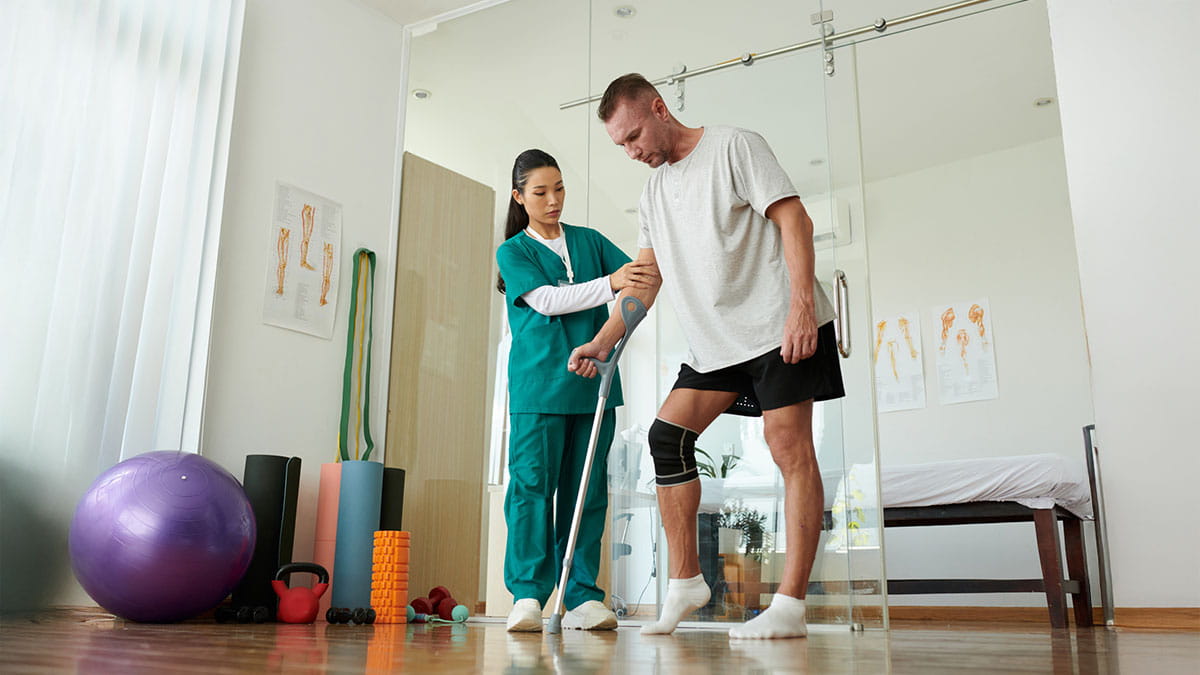
This recovery timeline gives a general guide to what often happens at different stages, to help set realistic expectations as you recover.
It has been developed with insights from Jakub Chudy, Managing Partner and Physiotherapist at HBF Physio Cockburn, and reflects his clinical experience supporting people through recovery.
Weeks 0-3: Protecting your knee and restoring movement
In the early stage, recovery is about protecting the knee while gently getting movement and muscle activation back.
Early recovery focuses on reducing swelling, restoring knee movement, particularly getting the knee fully straight, and beginning muscle activation. This stage is often described as a protection phase, where the goal is to create a strong foundation for later rehab rather than pushing strength or intensity.
Some people may still be using crutches or supports early on, and movement is progressed gradually based on comfort, swelling and control rather than a fixed timeframe.
Weeks 3-6: Building control and confidence with movement
This phase is often when people start to feel more confident moving – but the knee is still adapting. As recovery continues, rehab usually shifts toward improving movement control, strength and balance. Exercises often become more upright and functional, supporting activities like walking, standing and controlled knee bending.
While many people notice progress during this stage, rehab is still guided by how the knee responds, including swelling, movement quality and muscle control, rather than rushing ahead.
Weeks 6-12: Strengthening and steady progression
This stage is about building strength gradually and supporting the knee as demands increase. During this phase, strength and balance exercises are commonly progressed, and activity levels may slowly increase.
Even though this stage often aligns with certain timeframes, progression is still based on function, such as strength, movement quality and control, rather than the calendar alone. It’s also common for swelling or stiffness to come and go, especially as exercises become more challenging.
12 weeks and beyond: Ongoing improvement and higher level movement
Recovery doesn’t stop at a set week – improvements can continue for many months.
Later stages of rehab often focus on higher level strength, balance and coordination, depending on individual goals. Some people progress toward running or sport specific movement during later phases, while others focus on returning confidently to everyday activities.
Importantly, even at this stage, progression continues to be guided by strength, control and how the knee tolerates load – not just time since surgery.
Why timelines can look different for everyone
No two ACL recoveries look exactly the same — and that’s normal. Recovery can be influenced by many factors, including swelling, strength, confidence with movement and how consistently rehab is completed. Because of this, rehab programs are designed to progress in stages, with each phase building on the last when the knee is ready.
Comparing your recovery to someone else’s, or to a calendar, can be unhelpful. What matters most is safe, steady progress over time.
A quick reassurance if your recovery feels slow
Early recovery can feel like a lot of effort for small gains – but those gains are important. Rehab focuses on reaching specific movement and strength goals before progressing, rather than rushing through stages. Even when you move into later phases, strength and control continue to improve over time – recovery doesn’t end at a single milestone.
How can HBF help?
If you have eligible extras cover with HBF, you may be able to claim benefits for visits to a physiotherapist as part of your recovery after ACL reconstruction surgery.
Physiotherapy can support recovery by:
- Guiding progression through each rehab stage, based on how your knee is functioning
- Monitoring swelling, movement and strength, to help prevent setbacks
- Adjusting exercises as demands increase, so progress stays safe and appropriate
- Supporting confidence with movement, as you return to daily activities or higher level exercise

This article contains general information only and does not take into account the health, personal situation or needs of any person. In conjunction with your GP or treating health care professional, please consider whether the information is suitable for you and your personal circumstances.