Blog article
Exercise guide after a knee replacement
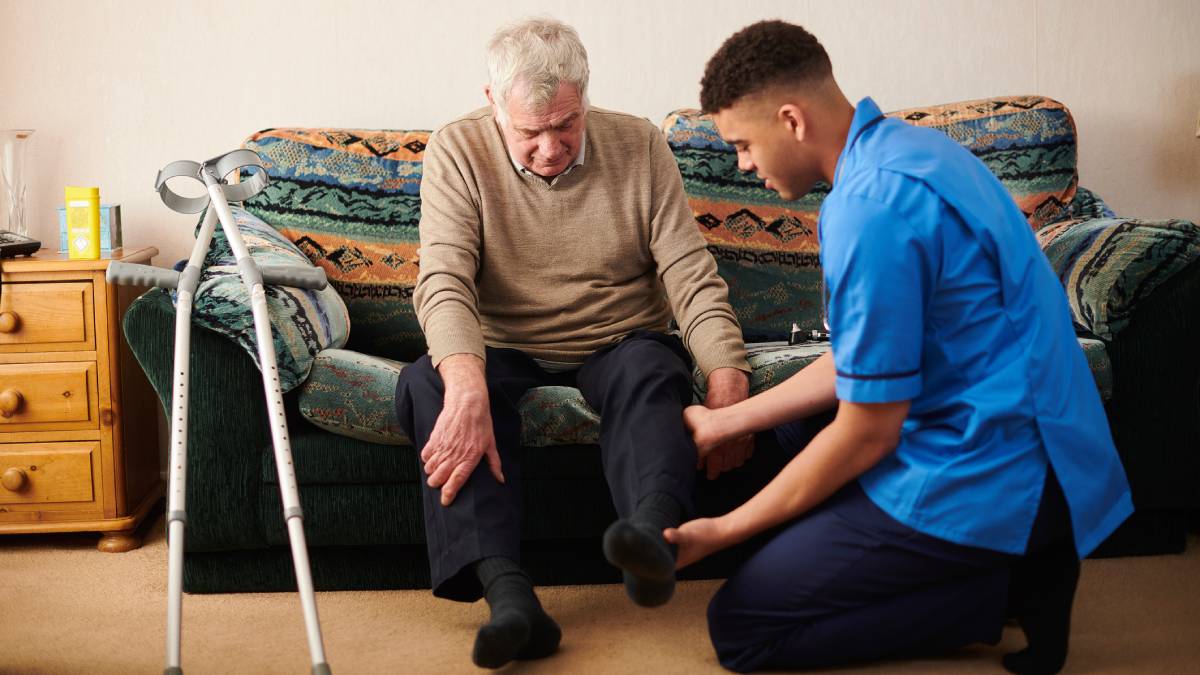
Exercise after a knee replacement plays an important role in restoring movement, strength and confidence over time.
In this blog, we look at the types of exercises commonly used after knee replacement surgery.
It has been developed with insights from Jakub Chudy, Managing Partner and Physiotherapist at HBF Physio Cockburn, and reflects his clinical experience supporting people through recovery.
Always follow your care team’s advice
Every knee replacement, and every recovery, is different. That’s why exercises should always be guided by your surgeon or physiotherapist.
Exercise programs after knee replacement are typically prescribed and progressed by a physiotherapist, based on individual recovery, surgery type and any precautions. We advise you to follow the exercises and guidance provided by your healthcare team.
Early exercises after a knee replacement
Early exercises focus on circulation and gentle movement – not strength or fitness. Early post operative exercises are commonly used to support circulation in the legs and feet, reduce stiffness and begin restoring knee movement. Rehabilitation often starts within the first day after surgery, depending on the individual.
Examples of early stage exercises may include ankle movements, to support circulation and reduce clot risk; gentle knee bending and straightening, within comfort limits; and muscle activation exercises, such as tightening the thigh muscles. These movements might feel small – but they play a big role early on.
Progressing movement as recovery continues
As your knee settles, exercises usually become more upright and functional, shifting from bed based and seated exercises to standing, balance and functional movements. These exercises are about rebuilding confidence in everyday movement.
Examples of later stage exercises commonly included in knee replacement rehabilitation may include:
Sit to stand and squat style movements: These movements help rebuild confidence with everyday tasks like standing up from a chair. Sit to stand patterns and squat style movements are commonly used to support lower limb strength and control for daily activities.
Step based movements: Step ups are often used to help prepare people for stairs. They can be included to support functional strength and coordination as confidence with movement improves.
Calf raises and lower leg strengthening: Calf strength plays an important role in walking and balance. Later stage rehabilitation programs may include calf focused exercises to support walking endurance and overall stability.
Balance exercises: Balance work helps people feel steadier and more confident as activity levels increase. These exercises are commonly included to support safe movement and reduce fall risk as recovery progresses.
Exercise should feel challenging, but controlled
Exercises should challenge you, but they shouldn’t feel rushed or uncontrolled. Rehabilitation programs are designed to progress gradually, and signs such as increased pain, swelling or prolonged soreness may indicate the need to adjust activity levels. People are advised to follow professional guidance if symptoms increase.
How can HBF help?
If you have eligible extras cover with HBF, you may be able to claim benefits for visits to a physiotherapist as part of your recovery after knee replacement.
Physiotherapy can support rehabilitation by:
- Guiding exercise progression, based on your recovery stage
- Supporting strength, balance and movement, as activity levels increase
- Monitoring technique and control, not just range of motion
- Adjusting your program over time, as confidence and capacity improve
A physiotherapist can help ensure exercises remain appropriate as your recovery continues.
This article contains general information only and does not take into account the health, personal situation or needs of any person. In conjunction with your GP or treating health care professional, please consider whether the information is suitable for you and your personal circumstances.