Blog article
Careers that move with life
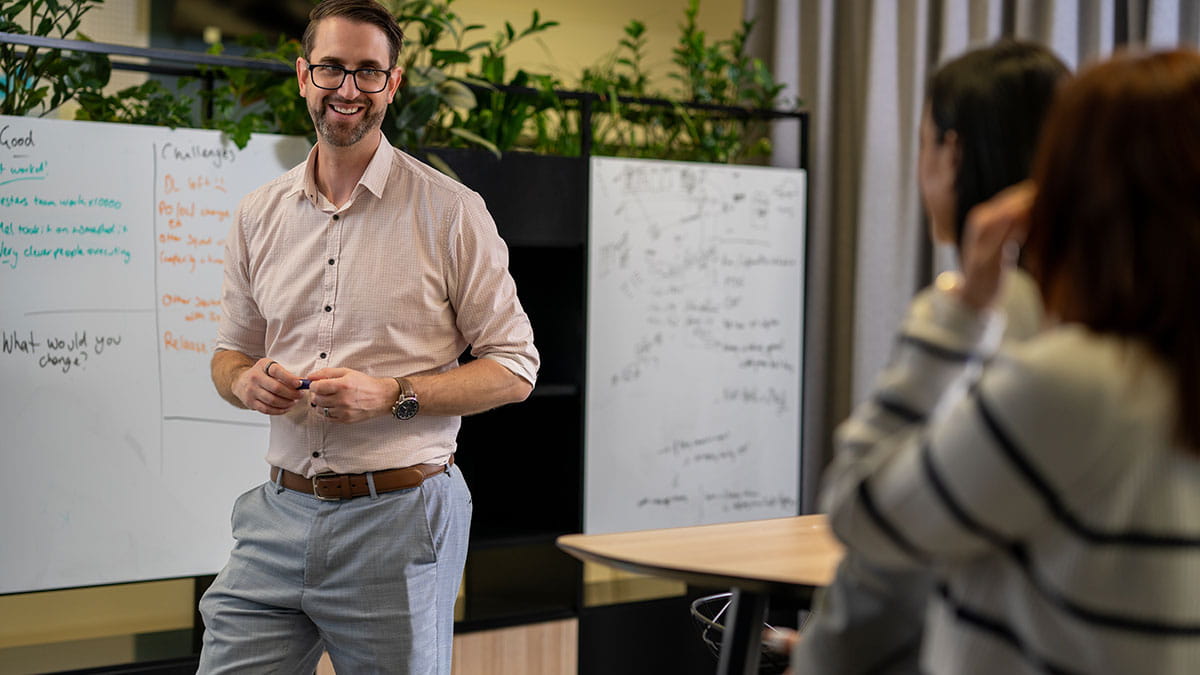
Work is never the only thing happening in a full life.
In some workplaces, deadlines, meetings and progression can be seen as fixed focal points, with everything else expected to be arranged around them.
But life rarely follows that same logic. There are often surprises and commitments that work must fit around. Just as, at times, there will be that critical work project that something else needs to make space for. It goes both ways.
The question isn’t whether work acknowledges that reality, but whether it’s designed with it in mind.
There’s a moment, in most people’s careers, where work stops fitting as neatly as it once did. It might be deciding to start a family, a shift in health, or simply a growing awareness that life doesn’t sit outside of work, it runs alongside it.
At HBF, there’s an understanding that a career stretches across many seasons of life
A sense that work can shift shape without losing its center, and a career can stretch to hold more than one version of life.
For Liam Webb, Chapter Lead for Delivery Enablement, that shift became clear when he took parental leave. It changed how he experienced time, giving him the space to be part of what was happening at home, rather than feeling like he was stepping away from work.
Across two periods of parental leave, Liam benefited from HBF's support for caregivers — he also saw the parental policy itself evolve. What stayed with him wasn’t the number of weeks, it was how that time could be used.
Instead of taking his leave in one continuous block, Liam shaped it around what his family needed.
“That flexibility really helped our family,” he said. “It meant I could support my wife when she needed it and be there for both my boys.”
He also reflects that stepping away was never something he had to negotiate or justify.
“It wasn’t just about being home,” he said. “It was about being present, sharing the load, and being there in those early moments.”
That same sense of continuity appears again in a different form in Elizabeth Levis’s experience.
Now General Manager of People Strategy and Culture, Elizabeth was stepping into a more senior leadership role at the same time she was navigating IVF and planning to start a family. Two significant milestones, unfolding at once.
In many environments, one would quietly give way to the other. Progression would pause or timing would be reconsidered, yet here they continue alongside each other.
Elizabeth’s ambitions weren’t treated as competing priorities to be managed. They were understood as part of the same life.
“There was never a sense that I had to choose between the two,” she said.
In Elizabeth’s team, that is not unusual. Three of the six team members have flexible working arrangements in place. Whether that means part-time hours, the ability to leave early for school pick-up, or the space to attend IVF appointments without feeling like stepping away needs to be justified.
“It's always been more of a conversation about how to make both work in a way that felt realistic.”
What stands out is that nothing needed to be put on hold. There wasn’t a point where everything else had to be neatly resolved before moving forward, or where one part of life had to pause for the other to catch up.
At HBF, flexibility works best when it is treated less like an exception and more like a practical way to help people keep contributing with support.
And then there are the versions of flexibility that don’t arrive as clearly defined moments
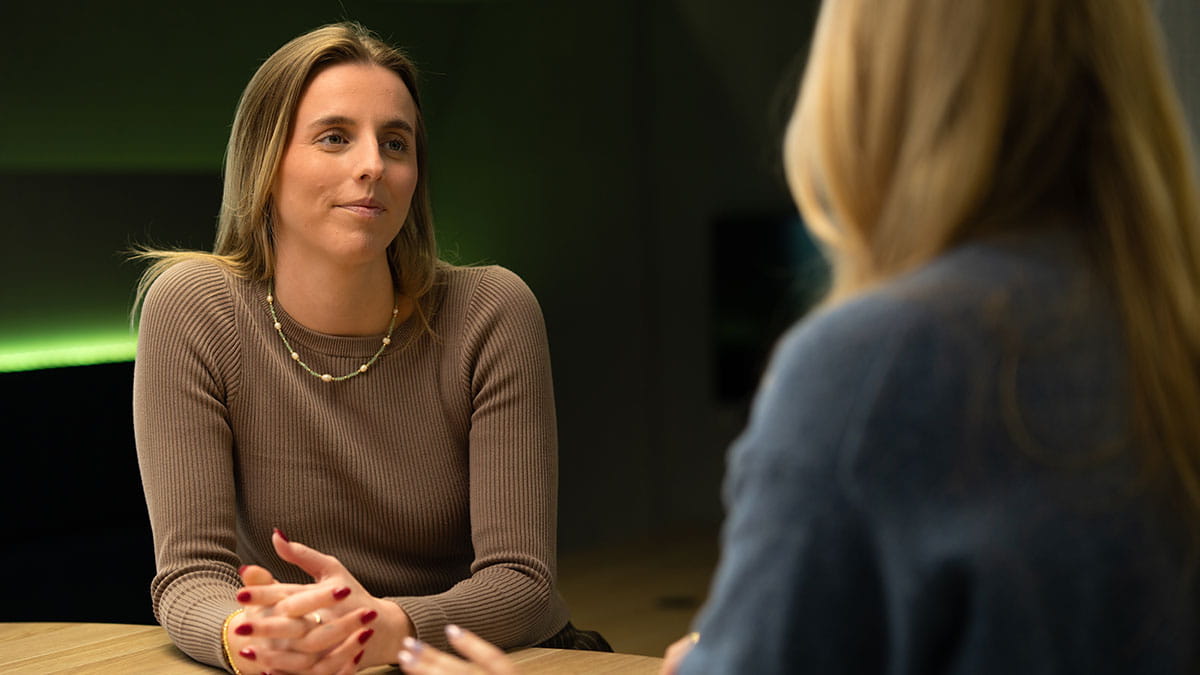
For Social Media Consultant Jemma Pollock, it doesn’t center on a single defining moment. It’s built through the way work fits life, day after day.
After years of navigating chronic illness, starting at HBF felt different.
“Starting at HBF has been a breath of fresh air,” she said. “For the first time in my career, I feel like my work and my health can successfully coexist.”
The flexibility to work from home when Jemma needs to means she can continue delivering high-quality work, even on days when her endometriosis symptoms are particularly challenging, without the added stress of constantly relying on sick leave.
What has made the biggest difference, however, is the support she has received from her manager, Sarah Wennell.

Rather than treating health as something to work around in isolation, the conversations have focused on finding practical arrangements that allow her to manage her symptoms while continuing to contribute meaningfully.
“Having that flexibility allows me to manage my symptoms while still contributing meaningfully, staying on top of my workload, and reducing the additional stress that can come with living with a chronic illness.”
— Jemma Pollock
It is a form of support that reflects a longer view of work and careers. One that recognises people will move through different seasons of life, and that health challenges do not diminish ambition, capability or contribution.
While each experience is different, there is a common (often unspoken) thread.
The support people need may look different from one season of life to the next, but the principle remains the same. Careers are built over years, not moments, and people do their best work when they are supported through the realities of life rather than expected to set them aside.
Both the individual and the work are better as a result.
This article contains general information only and does not take into account the health, personal situation or needs of any person. In conjunction with your GP or treating health care professional, please consider whether the information is suitable for you and your personal circumstances.