Blog article
7 habits that can help build a healthier mind
What the stats say about mental health in Australia
Eligible HBF members may be able to access the CSIRO Total Wellbeing Diet through our health programs. Depending on your level of cover and eligibility criteria, you may be able to access:
- 1 in 5 Australians aged 16-85 experienced a mental disorder in a 12 month period¹
- 17% of Australians experience an anxiety disorder, making it the most common mental health condition¹
- Almost 39% of Australians aged 16-24 experienced a mental disorder in 2020-22.²
- 43% of Australians aged 15-25 report feeling lonely.³
- Social isolation has increased from 16.9% to 29.9% over the past two decades.⁴
While we can’t control the stressors life slings us, we can find joy in healthy habits that strengthen our mental health, helping us cope with the rest.
But first, what is mental fitness?
Mental fitness is the ongoing practice of building habits that support your emotional wellbeing, resilience, focus and ability to cope with life's challenges. Just like physical fitness, it's something we can strengthen over time through regular practice.
Mental health and physical health are deeply connected. Sleep, movement, social connection and spending time outdoors can all influence how we feel, think and cope with stress.
Habit 1: Prioritise sleep
We know you’ve heard this one before but stay with us, because the latest theme in sleep science isn’t about getting more sleep, rather more regular sleep. A large study published in Psychological Medicine5 found that people with regular sleep-wake patterns were associated with:
- 38% lower risk of depression
- 33% lower risk of anxiety
compared with people whose sleep schedules were irregular. Notably, irregular sleepers still had higher mental health risks even when they were getting the ‘right’ number of hours of sleep. So, it's not just how long you sleep, it's how consistently you sleep. But what’s the habit takeaway? Protect your sleep routine! Look at winding down in a similar way each night and getting to bed and rising at a similar time too.
Habit 2: Move your body every day
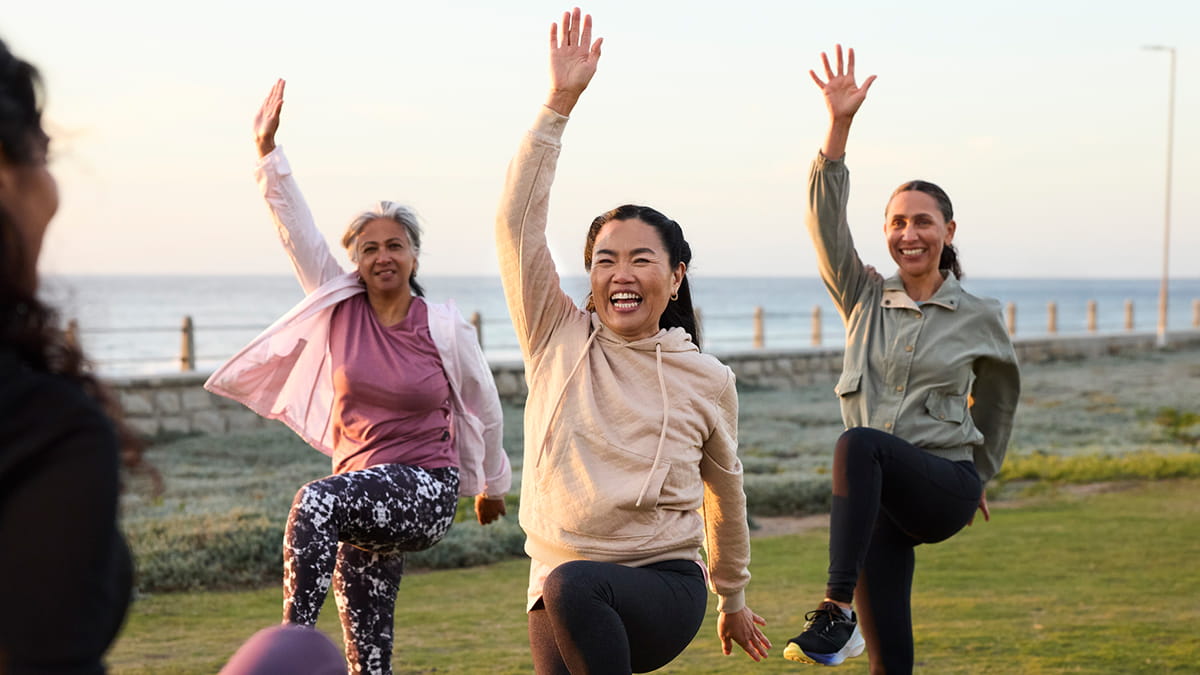
Finding a means of movement that is accessible and (hopefully) enjoyable for you is a huge habit to embrace and exercise remains to be one of the most effective ways to improve mental health.5 You don’t need to run a marathon to see the benefits either, a large 2024 review found that walking or jogging was among the most effective exercise types for reducing depressive symptoms. Or, consider mind-body workouts which are inclusive of but not limited to; yoga, pilates, barre, Qigong, Tai Chi.
“There is consistent evidence revealing yoga practices, including asanas, pranayama, meditation, and integrated yoga modules, contribute significantly to reducing mental health symptoms and enhancing overall psychological resilience. Mechanisms include neurochemical modulation, stress hormone reduction, and improved self-regulation.” Jayne, Mind Matters
7 natural therapies you can claim with HBF Extras
Habit 3: Nurture your friendships
Is it time to ‘get the holiday out of the group chat?’ If that’s too big, start small (but mighty). Making time for a coffee with a friend, joining a community group, calling a family member or checking in with a neighbour can help strengthen your sense of belonging and support your mental wellbeing. Strong social connections are one of the most powerful protective factors for mental health and friendships need a little care to thrive. Making time for the people who matter, whether that's a walk, phone call or lunch catch-up, can help boost your sense of connection and support mental fitness.
Seeking new friendships? You could consider:
- Joining clubs
- Volunteering
- Community groups
- A team sport
Running groups major mental health benefits
Habit 4: Find a hobby that's just for you
Ceramics calling? Time for tennis? Finding a hobby that’s just for you, whether that be cold ocean swimming (there’s science behind this one), a creative outlet, or a new group activity is a mood-boosting habit that has instant mental health benefits. Studies have linked hobby participation with lower levels of depression and higher levels of happiness, life satisfaction and overall wellbeing.
Some ideas:
- Gardening
- Crafting
- Learning an instrument
- Cooking (what about a class or workshop?)
- Photography
- Volunteering
- Joining a club
- Creative pursuits
- Outdoor hobbies
Habit 5: Spend time outdoors
We’ve already mentioned how exercising both the mind and body is a powerful way to build resilience and maintain good mental health, and getting outdoors amongst nature is going to help you grow in the same way. As psychologist Eleanor reminds us, it’s time to step outside, listen to birds singing, praise plants, Studies have found that benefits of spending time in nature can improve psychological well-being by improving mental focus and attention, reducing stress, lowering anxiety and improving mood.
Tip from a psychologist: Take time to fully notice what you can see, hear, smell, and feel in nature, approaching your surroundings with curiosity as though you are seeing them for the first time. Research shows that combining physical movement with mindful attention can improve mood, reduce stress, and support overall wellbeing.
Habit 6: Practice mindfulness (you can even do it while eating!)
According to mindful, ‘Mindfulness is the basic human ability to be fully present, aware of where we are and what we’re doing, and not overly reactive.’
Merging mindfulness into daily habits may be hugely beneficial to your mental health and can be a perfect stepping stone into seated meditation practise.
You could consider:
- Walking, standing, and moving meditations or even laying down before bed which can lead to sleep. Just taking this time to not think about anything else but what you are doing and noticing in the moment.
- Short pauses we insert into everyday life. There are some helpful apps available that allow you to set mindfulness timers on your devices, so you remember to take a moment to have a deep breath, close your eyes, and notice the nothing.
- Merging meditation practice with other activities, such as yoga, sport, even eating can be mindful (think about each bite, the flavour, the consistency, the joy…)
Habit 7: Seek support when you need it (you don't have to wait until things feel overwhelming.)
If you're struggling with your mental health, it's important to know that seeking help is a sign of strength. Talking to someone you trust, such as a friend, family member, GP or mental health professional, can be a positive first step. A GP can help you understand what you're experiencing, discuss support options and connect you with the right services. The earlier you reach out, the sooner you can access the support you deserve.
7 ways a counsellor can support your wellbeing
Advice from a clinical psychologist
Mind Matters psychologist Ben shares his go-to advice on seeking hobbies, forming new habits, and how mental fitness is just as important as breaking a sweat.
- Start small: with simple, small, repeatable goals. The dopamine effect of achieving even just small goals is the motivator of behaviour.
- Re-wire your brain: every time you repeat a behaviour, you strengthen specific neural pathways making that behaviour more automatic.
- Replace the old with the new: Good habits are easier to keep if you are replacing an old (bad) habit – for example if your habit is to have a cigarette after eating, replacing the cigarette with a piece of fruit is an easier way to start better eating habits.
Sources:
1Prevalence and impact of mental illness - Mental health - AIHW
2Young people's mental health (12–24 years) - Mental health - AIHW
3More than 2 in 5 young Australians are lonely, our new report shows. This is what could help
4Social isolation in Australia has nearly doubled over two decades
This article contains general information only and does not take into account the health, personal situation or needs of any person. In conjunction with your GP or treating health care professional, please consider whether the information is suitable for you and your personal circumstances.